
Building a new home or business, or just need to update or repair the exterior of an existing building?Different types of siding provide different benefits. Making the right choice of material should be carefully considered. Variables to consider include:
- Cost of materials and installation
- Time and money spent on upkeep and maintenance
- Type of building the siding will be going on
- How long you would like the siding to last
Types of Siding
There are many different types of siding. The following options are what we at JLS most commonly work with here in Tri- Cities, Washington:
Fiber Cement siding is the most common type of siding. It is made primarily of cement, wood pulp and various reinforcing fibers, making it a durable and versatile siding option for residential and commercial buildings. Fiber cement siding is a popular choice for homeowners seeking a low-maintenance and visually appealing siding option.
Pros:
- Durability: highly durable and resistant to many common issues that affect other siding materials, such as rot, insect damage and moisture. It can withstand harsh weather conditions, including wind, rain and snow.
- Low maintenance: requires minimal maintenance and retains its color well over time.
- Fire-resistance: non-combustible and has a high fire resistance rating.
- Aesthetic versatility: comes in various textures and finishes.
- Longevity: when properly installed and maintained, fiber cement siding can have a long lifespan, often exceeding 50 years.
Cons:
- Cost: tends to be more expensive than vinyl siding, but can be comparable to wood or stucco siding.
- Installation: proper installation is crucial to prevent issues like moisture filtration.
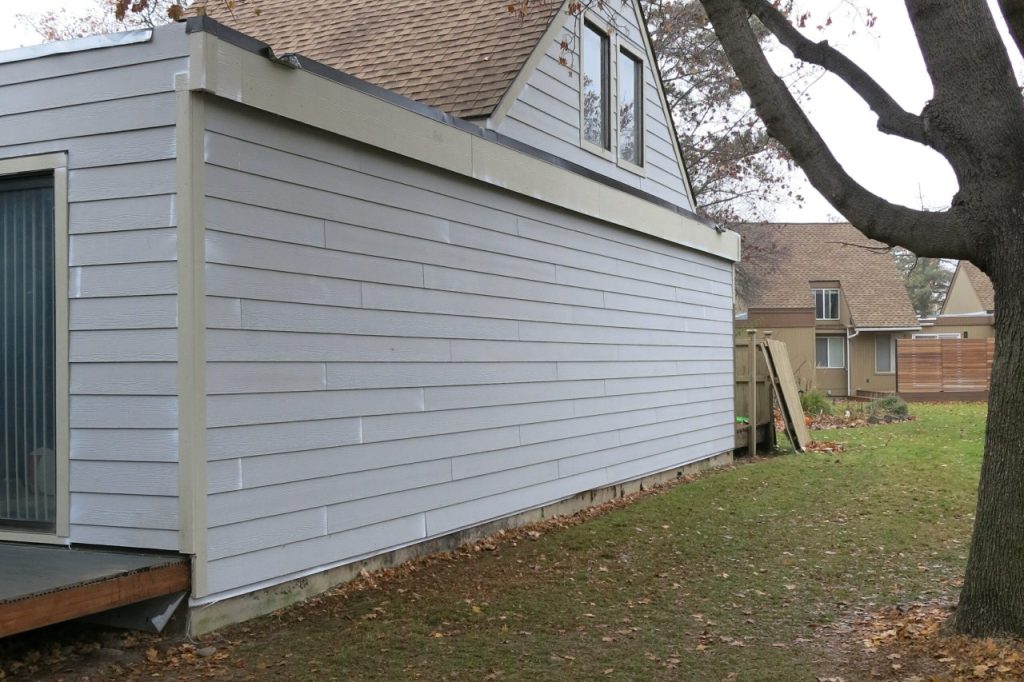
Unpainted fiber cement siding by Allura, installed by JLS Consulting and Contracting.
Vinyl siding is made primarily from polyvinyl chloride (PVC) resin, along with other additives to enhance its durability and appearance. Vinyl siding is designed to mimic the look of traditional wood siding, shingles or other materials.
Pros:
- A cost-effective option, making it budget-friendly for homeowners.
- Low maintenance: does not need painted and is resistant to rot, insects and moisture.
- Versatile: available in a wide range of colors, styles and textures.
- Durable: known for its longevity and durability.
Cons:
- Limited aesthetic options: vinyl does come in various styles and colors, but may not fully replicate the authentic look of natural materials.
- Susceptible to fading: over time, exposure to sunlight can cause vinyl siding to fade or discolor, affecting its appearance.
- Heat sensitivity: vinyl siding can warp or distort when exposed to extreme heat, such as nearby grills or reflective sunlight off windows.
Wood Siding is an exterior cladding material made from natural wood. Common wood siding options include wood clapboard siding, wood shingle siding, wood shake siding, board-and-batten siding and plywood siding.
Pros:
- Natural beauty: provides a warm and timeless aesthetic that many homeowners find appealing.
- Versatility: can be painted or stained in various colors.
- Insulation: wood siding can provide some level of insulation, helping to regulate indoor temperatures.
Cons:
- Maintenance: requires regular maintenance, including painting or staining every few years to protect it from moisture, insects and rot.
- Cost: depending on the type of wood chosen, wood siding can be more expensive than some alternative siding materials.
- Susceptible to damage: can be damaged by pests, such as termites, and is vulnerable to rot and decay if not properly maintained.
Metal siding is made primarily from various types of metal, most commonly steel, aluminum, and occasionally other alloys. Metal siding is most often seen on barn, shops, and other outbuildings.
Pros:
- Durability: exceptionally durable and can withstand harsh weather conditions, including extreme temperatures, rain, snow and high winds. It is resistant to rot, insect and moisture damage.
- Low maintenance: requires minimal maintenance compared to some other siding materials. Doesn’t need painting, staining, or frequent cleaning. Occasional washing is usually enough to keep it looking great.
- Fire resistant: Has a high fire resistance rating and is non-combustible.
- Longevity: when properly installed and maintained, metal siding can have a long lifespan, often exceeding 50 years.
Cons:
- Cost: initial cost can be higher than some other materials, but its durability and low maintenance can offset long-term expenses.
- Installation: proper installation is crucial to prevent issues like water infiltration or warping.
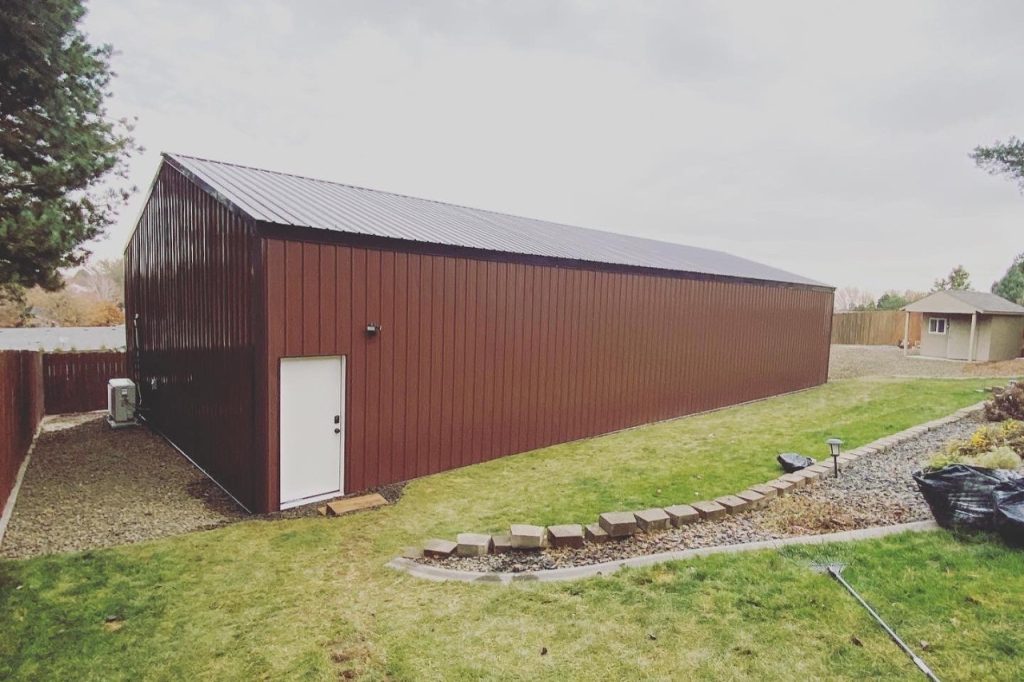
Metal siding on a shop project done my JLS Consulting and Contracting.
Stucco is made from a mixture of cement, sand, and water. It is applied in layers to create a hard, textured surface on exterior walls.
Pros:
- Aesthetic variety: can be applied in different textures and finishes, offering a range of design possibilities.
- Durability: highly durable and can withstand a range of weather conditions, including hot and dry climates. Resistant to fire, rot and pests.
- Low maintenance: requires minimal maintenance. Does not require frequent painting or staining, and can be easily cleaned with water and a mild detergent if necessary.
- Longevity: when properly installed and maintained, stucco siding can have a long lifespan, often exceeding 50 years.
- Resale value: stucco is often considered an attractive feature in real estate, which can potentially increase the resale value of a property.
Cons:
- Climate: stucco is most commonly used in dry or arid regions. In wet climates, it may be more susceptible to moisture-related issues if not properly maintained or installed with proper drainage.
- Cracking: stucco can develop hairline cracks over time due to settling or temperature changes. These cracks are generally cosmetic and can be repaired easily.
- Installation: installation requires skill and expertise to ensure a proper and long-lasting finish. Improper installation can lead to issues like water infiltration.
We at JLS Consulting and Contracting are happy to assist you in choosing the right kind of siding for your project, be it your home, shop, or business. Give us a call today!